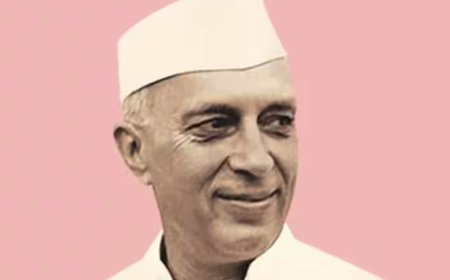
Mahatma Gandhi: The Father of the Nation
Mahatma Gandhi's life and methods of struggle impact people now also. The greatness of a man is realized when his life influences people to change for the better, and so was Mahatma Gandhi's life. After decades of his death, after reading about him, people drastically changed their lives for the better. Let's have a look at Mahatma Gandhi's life, movements, famous quotations written by him, etc. Find out about him this Martyr's Day!

Mohandas Karamchand Gandhi or Mahatma Gandhi
was a renowned freedom activist and an authoritative or powerful political leader who played an essential role in India's struggle for Independence against British rule of India. He was also considered the father of the country. No doubt, he also improved the lives of India's poor people. His birthday is celebrated every year as Gandhi Jayanti. His ideology of truth and non-violence influenced many and was also adopted by Martin Luther and Nelson Mandela for their struggle movement.
Mahatma Gandhi Biography
Full Name: Mohandas Karamchand Gandhi
Born: 2 October, 1869
Place of Birth: Porbandar, Gujarat
Death: 30 January, 1948
Place of Death: Delhi, India
Cause of Death: Shot by Gun or assassination
Father: Karamchand Gandhi
Mother: Putlibai Gandhi
Nationality: Indian
Spouse: Kasturba Gandhi
Children: Harilal Gandhi, Manilal Gandhi, Ramdas Gandhi and Devdas Gandhi
Professions: Lawyer, Politician, Activist, Writer
In South Africa for about 20 years, Mahatma Gandhi protested against injustices and racial discrimination using the non-violent method of protests. His simplistic lifestyle won him, admirers, both in India and the outside world. He was popularly known as Bapu (Father).
The early life of Mahatma Gandhi: Birth and Family
Mohandas Karamchand Gandhi was born on 2nd October 1869, in Porbandar in the princely state of Kathiawar in Gujarat.
His father was Karamchand Uttamchand Gandhi who served as a dewan of Porbandar state. His mother was Putlibai who came from Junagadh. Mohandas was the youngest of four children. He had two brothers and a sister.
At age of 13, Mohandas was married to 14-year-old Kastubai Makhanji Kapadia as was the custom at that time.
His father passed away in 1885, and the same year he and his wife lost their first child. The Gandhi couple later had four sons over the years.
Education of Mahatma Gandhi
Gandhi Ji received his primary education in Rajkot where his father had relocated as dewan to the ruler Thakur Sahib. He went to Alfred high school in Rajkot at the age of 11.
In 1887, at the age of 18, Gandhi Ji graduated from a high school in Ahmedabad. He later enrolled at a college in Bhavnagar but dropped out later. He had also joined and eventually dropped out of a college in Bombay.
He then went to London in 1888 to pursue law at the university college. After completing his studies, he was invited to be enrolled at Inner temple to become a barrister.
He returned to India in 1891 at the age of 22 after his mother passed away.
He failed to establish a successful law career both in Rajkot and Bombay.
In 1893, he moved to Durban, South Africa, on a one-year contract to sort out the legal problems of Abdullah, a Gujarati merchant.
Off to London
In the year 1888, Mahatma Gandhi left for London to study law. Thereafter 10 days after arrival, he joined the Inner Temple, one of the four London law colleges, and studied and practiced law. In London, he also joined a Vegetarian Society and was introduced to Bhagavad Gita by some of his vegetarian friends. Later, Bhagavad Gita set an impression and influenced his life.
South Africa during the 1800s
The British had colonized and settled in the Natal and Cape provinces of South Africa during the 1840s and 50s. Transvaal and Orange Free State were independent Boer (British and Dutch settlers) ruled states. Boer means farmer settler in Dutch and Afrikaans. The governance of colonial regions (Natal and Cape) was controlled by the minority white population which enforced segregation between government-defined races in all spheres.
This created three societies- whites (British and Dutch or Boer ancestry), Blacks and Coloureds (mixed race) which included ethnic Asians (Indians, Malayans, Filipinos, and Chinese).
Indian immigration to South Africa began in the 1860s, when whites recruited indentured Indian labour (Girmityas), especially from south India, to work on sugar plantations. Later many Indian merchants, mostly meman Muslims also migrated. By the 1890s, the children of the ex-indentured labourers had settled down in South Africa making up the third group.
Mahatma Gandhi in South Africa
1893: Mohandas Gandhi witnessed extreme apartheid or racial discrimination against Asians in South Africa. His journey from Durban to Pretoria witnessed the famous incident when he was thrown out of a first-class compartment by a white man at Pietermaritzburg station. Upon arriving at Johanessburg, he was refused rooms in the hotels.
These experiences motivated him to stay in South Africa for a longer period to organize the Indian workers to enable them to fight for their rights. He started teaching English to the Asian population there and tried to organize them to protest against the oppression.
1894: After the culmination of his Abdullah case in 1894, he stayed on there and planned to assist Indians in opposing a bill to deny them the right to vote. He founded the Natal Indian Congress and moulded the Indian community into a unified political force.
1899-1902: The Boer War
The Boer War extended Britain’s control from Natal and Cape Province to include Transvaal and Orange Free State.
During this time, Gandhi volunteered to form a group of stretcher-bearers as the Natal Indian ambulance corps. It consisted of indentured labourers and was funded by the Indian community and helped treatment and evacuation of wounded British soldiers.
Gandhi Ji thought that helping the British war efforts would win over the British imperial government and earn sympathy for the plight of Indians there. He was also awarded the Queen’s South Africa Medal for serving the British empire.
Till 1906, it was the moderate phase of the struggle for the Indians in South Africa. During this time, Gandhi concentrated on petitioning and sending memorials to the legislatures, the colonial secretary in London, and the British parliament.
1906: The Civil Disobedience in South Africa
The failure of moderate methods led to the second phase of the struggle, civil disobedience or the Satyagraha.
He started two settlements- the Phoenix settlement in Durban and the Tolstoy farm in Johanessburg for helping the needy and initiate a communal living tradition.
His first notable resistance was against the law passed by the government, making it compulsory for Indians to take out certifications of registrations that held their fingerprints and was compulsory to carry it on the person at all times. Gandhi formed a Passive Resistance Association against this.
Gandhi and his followers were jailed. Later the government agreed to withdraw the law if Indians voluntarily registered. They were tricked into the registrations and they protested again by publicly burning their certificates.
1908: The existing campaign expanded to protest against the new law to restrict migrations of Indians between provinces. Gandhi and others were jailed and sentenced to hard physical labour.
1910: Gandhi Ji set up the Tolstoy farm in Johannesburg to ready the satyagrahis to the harsh conditions of the prison hence helping to keep the resistance moving forward.
1911: Gopal Krishna Gokhale visited South Africa as a state guest on the occasion of the coronation of King George V. Gokhale and Gandhi met at Durban and established a good relationship.
1913: The satyagraha continued against varied oppressive laws brought by the government. The movement against the law invalidating marriages not conducted according to Christian rites brought out many Indian women onto the movement.
Gandhi launched a final mass movement of over 2000 men, women, and children. They were jailed and forced into miserable conditions and hard labour. This caused the whole Indian community in South Africa to rise on strike.
In India, Gokhale worked to make the public aware of the situation in South Africa which led the then Viceroy Hardinge to call for an inquiry into the atrocities.
A series of negotiations took place between Gandhiji, Viceroy Hardinge, CR Andrews (Christian missionary and Indian Independence activist), and General Smuts of South Africa. This led to the government conceding to most of the Indians’ demands.
Gandhiji’s return to India: 1915
1915: On the request of Gokhale, conveyed by CF Andrews (Deenbandhu), Gandhi Ji returned to India to help with the Indian struggle for independence.
The last phase of the Indian National movement is known as the Gandhian era.
Mahatma Gandhi became the undisputed leader of the National Movement. His principles of nonviolence and Satyagraha were employed against the British government. Gandhi made the nationalist movement a mass movement.
On returning to India in 1915, Gandhi toured the country for one year on Gokhale’s insistence. He then established an ashram in Ahmedabad to settle his phoenix family.
He first took up the cause of indentured labour in India thus continuing his fight in South Africa to abolish it.
Gandhiji joined the Indian National Congress and was introduced to Indian issues and politics and Gokhale became his political Guru.
1917: At this point, World war I was going on, and Britain and France were in a difficult position. Germany had inflicted a crushing defeat on both the British and French troops in France.
Russia’s war effort had broken down and the revolution was threatening its government.
America had entered the war but no American troops had yet reached the war front.
The British army required reinforcements urgently and they looked to India for participation. Viceroy Chelmsford had invited various Indian leaders to attend a war conference. Gandhi was also invited and he went to Delhi to attend the conference.
After attending the viceroy’s war conference Gandhiji agreed to support the recruitment of Indians in the British war effort. He undertook a recruitment campaign in Kaira district, Gujarat.
He again believed that support from Indians will make the British government look at their plight sympathetically after the war.
Early movements by Gandhiji
Champaran Satyagraha, Kheda Satyagraha, and Ahmedabad Mill Strike were the early movements of Gandhi before he was elevated into the role of a national mass leader.
1917: Champaran Satyagraha
Champaran Satyagraha of 1917 was the first civil disobedience movement organized by Gandhiji. Rajkumar Shukla asked Gandhi to look into the problems of the Indigo planters.
The European planters had been forcing passengers to grow Indigo on a 3/20 of the total land called the tinkatiya system.
Gandhi organized passive resistance or civil disobedience against the tinkatiya system. Finally, the authorities relented and permitted Gandhi to make inquiries among the peasants. The government appointed a committee to look into the matter and nominated Gandhi as a member.
Rajendra Prasad, Anugrah Narayan Sinha, and other eminent lawyers became inspired by Gandhi and volunteered to fight for the Indigo farmers in court for free.
Gandhi was able to convince the authorities to abolish the system and the peasants were compensated for the illegal dues extracted from them.
1918: Kheda satyagraha
The Kheda Satyagraha was the first noncooperation movement organized by Gandhi.
Because of the drought in 1918 crops failed in the Kheda district of Gujarat. According to the revenue code if the yield was less than one-fourth of the normal produced the farmers for entitled to remission. Gujarat sabha sent a petition requesting revenue assessment for the year 1919 but the authorities refused to grant permission.
Gandhi supported the peasants’ cause and asked them to withhold revenue. During the Satyagraha, many young nationalists such as Sardar Vallabhbhai Patel and Indulal Yagnik became Gandhi’s followers.
Sardar Patel led a group of eminent people who went around villages and gave them political advisors and instructions.
The government finally agreed to form an agreement with the farmers and hence the taxes were suspended for the years 1919 and 1920 and all confiscated properties were returned.
1918: Ahmedabad mill strike
This was Gandhi’s first hunger strike. He intervened in a dispute between Mill owners of Ahmedabad and the workers over the issue of discontinuation of the plague bonus.
The workers were demanding a rise of 50% in their wages while the employees were willing to concede only a 20% bonus.
The striking workers turned to Anusuiya Sarabai in quest of justice and she contacted Gandhi for help. He asked the workers to go on a strike and to remain non-violent and undertook a fast unto death to strengthen the workers’ resolve.
The mill owners finally agreed to submit the issue to a tribunal and the strike was withdrawn in the end the workers receive a 35% increase in their wages.
Mahatma Gandhi: Role in the Indian Independence Movement
In 1915, Gandhiji returned to India permanently and joined the Indian National Congress with Gopal Krishna Gokhale as his mentor.
Gandhi's first major achievement was in 1918 when he led the Champaran and Kheda agitations of Bihar and Gujarat. He also led Non-Cooperation Movement, Civil Disobedience Movement, Swaraj, and Quit-India movement against the British government.
1919: Khilafat movement
During World War I Gandhi sought cooperation from the Muslims in his fight against the British by supporting the Ottoman Empire that had been defeated in the world war.
The British passed the Rowlatt act to block the movement. Gandhi called for a nationwide Satyagraha against the act.
It was Rowlatt Satyagraha that elevated Gandhi into a national leader. Rowlatt Satyagraha was against the unjust Rowlatt Act passed by the British.
On April 13th, 1919 the Jallianwala Bagh incident took place. Seeing the violence spread Mahatma Gandhi called off the civil disobedience movement on the 18th of April.
1920: Non-Cooperation Movement
Gandhi convinced the congress leaders to start a Non-Cooperation Movement in support of Khilafat as well as Swaraj. At the congress session of Nagpur in 1920, the non-cooperation program was adopted.
1922: Chauri chaura incident took place, which caused Gandhi to withdraw from the non-cooperation movement.
After the non-cooperation movement ended, Gandhi withdrew from the political platform and focused on his social reform work.
1930: The Salt March and The Civil Disobedience Movement
Gandhi declared that he would lead a march to break the salt law as the law gave the state the Monopoly on the manufacturer and the sale of salt.
Gandhi along with his followers marched from his ashram in Sabarmati to the coastal town of Dandi in Gujarat where they broke the government law by gathering natural salt and boiling seawater to produce salt.
This also marked the beginning of the civil disobedience movement.
1931: The Gandhi Irwin pact
Gandhi accepted the truce offered by Irwin and called off the civil disobedience movement and agreed to attend the second round table conference in London as the representative of the Indian National Congress.
But when he returned from London he relaunched the civil disobedience movement but by 1934 it had lost its momentum.
1932: Poona pact
This was a pact reached between B.R Ambedkar and Gandhi concerning the communal awards but in the end, strived to achieve a common goal for the upliftment of the marginalized communities of the Indian society.
1934: Gandhi resigned from the Congress party membership as he did not agree with the party’s position on varied issues.
Gandhi returned to active politics in 1936 with the Lucknow session of Congress where Jawaharlal Nehru was the president.
1938: Gandhi and Subhash Chandra Bose’s principles clashed during the Tripuri session which led to the Tripuri crisis in the Indian National Congress.
1942: Quit India movement
The outbreak of World war II and the last and crucial phase of national struggle in India came together.
The failure of the Cripps mission in 1942 gave rise to the Quit India movement.
Gandhi was arrested and held at Aga Khan Palace in Pune. During this time his wife Kasturba died after 18 months of imprisonment and in 1944 Gandhi suffered a severe malaria attack.
He was released before the end of the war on 6th May 1944. World war II was nearing an end and the British gave clear indications that power would be transferred to Indians hence Gandhi called off the struggle and all the political prisoners were released including the leaders of Congress.
Partition and independence
Gandhiji opposed the partition of India along religious lines.
While he and Congress demanded the British quit India the Muslim league demanded to divide and quit India.
All of Gandhi’s efforts to help Congress and the Muslim league reach an agreement to corporate and attain independence failed.
Gandhiji did not celebrate the independence and end of British rule but appealed for peace among his countrymen. He was never in agreement for the country to be partitioned.
His demeanour played a key role in pacifying the people and avoiding a Hindu-Muslim riot during the partition of the rest of India.
Mahatma Gandhi: Death
Mohandas Karamchand Gandhi was assassinated on 30 January 1948 by Nathuram Godse. Godse was a Hindu nationalist and a member of the Hindu Mahasabha. He accused Gandhi of favoring Pakistan and was opposed to the doctrine of non-violence.
Mahatma Gandhi: Literary works
Gandhi was a prolific writer. Some of his literary works are as follows:
• Hind Swaraj, published in Gujarati in 1909.
• He edited several newspapers which included Harijan in Gujarati, in Hindi and the English language; Indian Opinion, Young India, in English, and Navajivan, a Gujarati monthly.
• Gandhi also wrote his autobiography, The Story of My Experiments with Truth.
• His other autobiographies included: Satyagraha in South Africa, Hind Swaraj or Indian Home Rule.
Mahatma Gandhi: Awards
• In 1930, Gandhi was named the Man of the Year by Time Magazine.
• In 2011, Time magazine named Gandhi as one of the top 25 political icons of all time.
• He did not receive the Nobel Peace Prize despite being nominated five times between 1937 and 1948.
• The Government of India institutionalized the annual Gandhi Peace Prize to distinguished social workers, world leaders, and citizens. Nelson Mandela, the leader of South Africa's struggle against apartheid was a recipient of the award.
"Happiness is when what you think, what you say, and what you do are in harmony." - Mahatma Gandhi
Mahatma Gandhi: Film
Ben Kingsley portrayed Mahatma Gandhi in the 1982 film Gandhi, which won the Academy Award for Best Picture.
Therefore, Mahatma Gandhi will be remembered forever as he spread the message of non-violence, truth, and faith in God, and also he fought for India's Independence. His methods inspired various leaders, and youth not only in India but also outside of India. In Indian history, he is considered the most prominent personality and as the simplest person who wears a dhoti. He spread the message of swaraj and taught Indians how to become independent.
Facts About Mahatma Gandhi
- According to Britannica, "The United Nations declared Gandhi's birthday, October 2nd, as the International Day of Non-violence in 2007."
- While the world knows him as Mahatma Gandhi, a beacon of nonviolent resistance and Indian independence, his journey began with a more humble name: Mohandas Karamchand Gandhi. Born in 1869, Mohandas' life took a pivotal turn when he encountered the title that would forever shape his legacy: Mahatma.
- In 1883, at the tender age of 13, Mohandas Gandhi's life took a significant turn when he was arranged to marry Kasturba Makhanji, who was also 13 at the time.
- In 1930, the world watched with bated breath as India's independence movement gained momentum under the leadership of Mahatma Gandhi. His unwavering commitment to nonviolent resistance, his charisma, and his ability to mobilise millions made him the Person of the Year by the Time Magazine.
- A lifelong vegetarian, Mr. Gandhi's meals centered on fresh vegetables, curd, fruits, seeds, and nuts.
Join us, follow us....
Follow on Telegram – Click Here
Follow Whats apps Channel – Click Here
Join Google News Group – Click Here