Rani Gaidinliu: The Daughter of the hills
There are numerous unsung heroes in India’s struggle for independence whose extraordinary efforts have been overshadowed by more well-known individuals. The daring and charismatic leader Rani Gaidinliu, who came from the northeastern states of Assam, Manipur, and Nagaland, symbolises the persistence and power of the nation’s varied freedom struggle. In the face of hardship, Gaidinliu came to represent resistance against British imperialism.
The early life of Rani Gaidinliu:
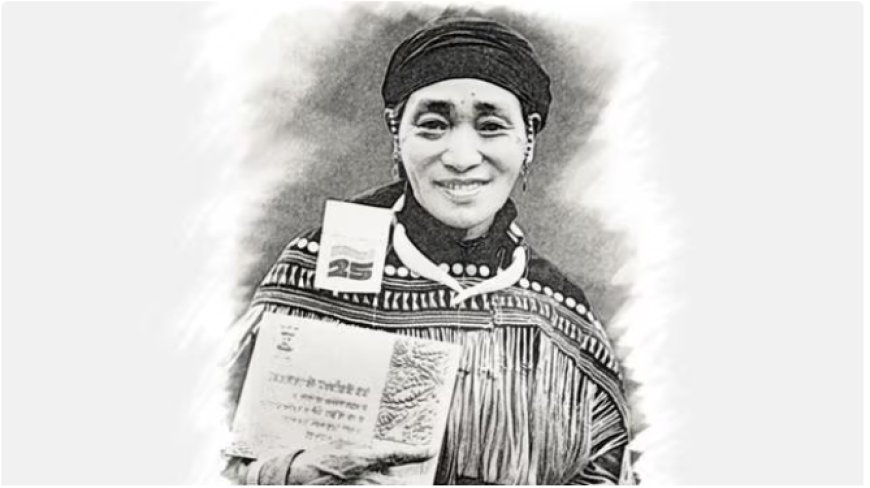
A spiritual and political leader, Gaidinliu, of the Rongmei tribe, was born on January 26, 1915, at Luangkao village. She was always keen to preserve the identity and culture of her community, the Zeme, Liangmai, Rongmei, and Inpui, a mix of blood-related tribes that are also referred to as ‘Zeliangrong’ and are spread across Assam, Manipur, and Nagaland.
She became associated with freedom fighter and religious leader, Haipou Jadonang, who was also her cousin, at the age of 13. She became his lieutenant in the social, religious, and political movement. Jadonang, who was also a Rongmei, started the ‘Heraka movement’ which was based on the ancestral Naga religion. He envisioned an independent Naga kingdom (or Naga-Raja).
Freedom Struggle
Gaidinliu’s flame of revolt was kindled in 1931 when she witnessed the execution of Jadonang by the British. She took on the role of leader and started organizing the Naga tribes against the British Raj, determined to continue his legacy. Due to her compelling personality and persuasive oratory, Gaidinliu gained popularity fast and became well-known in the northeastern frontier’s independence movement. As she planned guerilla warfare against the British army in the deep woods of Assam, Manipur, and Nagaland, Gaidinliu’s movement gained momentum. Her capacity to bring different Naga clans together for a shared goal demonstrated her leadership abilities.
With a strategic acumen, the Rani of the Nagas, as she became known, led her warriors in a guerrilla fashion, presenting a serious threat to the British military apparatus. Gaidinliu’s rebellion was met with a merciless British response, finally resulting in her capture in 1932. She bravely confronted the colonial authority despite her youth. She was given a life sentence by the British, yet this did not break her spirit. Gaidinliu inspired her supporters throughout her imprisonment and became a symbol of defiance despite imprisonment.
Rani Gaidinliu’s fight against the British:
Rani Gandinliu’s association with Jadonang and Heeraka movement pushed her into the fight with the British. After the execution of Jadonang, she took up the leadership of the movement which slowly turned political from religious. Rani started a serious revolt against the British and was eventually imprisoned for life for 14 years.
She established a tribal organization, Kabini Samiti in 1934.
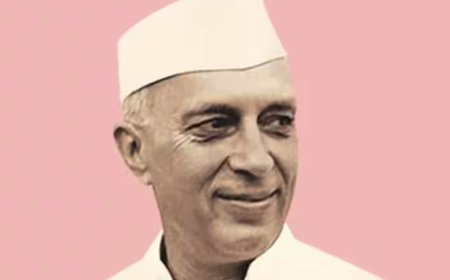
Jawaharlal Nehru met Gaidinliu in Shillong in 1937 and promised to pursue her release from jail.
She was finally released in 1947, after India’s independence, on first prime minister Jawaharlal Nehru’s orders. Nehru described Gaidinliu as the “daughter of the hills” and he gave her the title of ‘Rani’ for her courage.
What was the Heraka Movement?
Heraka was a socio-religious movement that arose in the 1920s in the Zeliangrong territory. Heraka, which means pure, is a monotheistic religion where the followers worshipped Tingkao Ragwang.
It was started by Jadonang to resist the infiltration of Christian missionaries as well as the reforms imposed by the British government. He witnessed the repression by British officers, who forced the tribals into harsh labour and imposed high yearly revenue tax on every household. Gaidinliu was at the forefront of the Heraka movement.
In 1931, Jadonang was arrested by the British and after a mock trial and was hanged for opposing the colonial rule on 29 August 1931. To ensure the movement does not die down with Jadonang, Gaidinliu took up the mantle from her cousin.
She linked her spiritual role as a leader of the socio-religious movement to her role as a nationalist and constantly evoked Mahatma Gandhi’s efforts at the national level to inspire her people to rebel against the British.
Gaidinliu began her version of the Non-cooperation Movement among Naga tribes. She made it difficult for the British administration to function in the region after she instructed all households to abstain from paying taxes.
Honors Post-independence and death:
She passed away on February 17, 1993, at her native village Luangkao.
She was bestowed with many honours including the Tamrapatra in 1972, Padma Bhushan in 1982, Vivekananda Sewa Summan in 1983, and Stree Shakti Puraskar in 1991.
She was posthumously awarded the Bhagwan Birsa Munda Puraskar in 1996.
The Government of India also issued a commemorative stamp in her honour in the same year.
The Indian Coast Guard commissioned a Fast Patrol Vessel “ICGS Rani Gaidinliu” in 2016.
In 2015, on her birth anniversary, the Centre issued commemorative coins of Rs 100 and a circulation coin of Rs 5 in her honour.
Rani Gaidinliu Museum
Union Home Minister Amit Shah virtually laid the foundation stone for the Rani Gaidinliu museum in Manipur’s Tamenglong district in November 2021.
The museum project was sanctioned by the Ministry of Tribal Affairs, Government of India in 2019.
The museum would help preserve and exhibit artefacts related to the tribal freedom fighters, involved in different stages of the fight against the British colonial rule like the Anglo-Manipuri War, Kuki-Rebellion, Naga-Raj movements, among others.
Rani Gaidinliu Air lounge
To recognize the contribution of freedom fighter Rani Gaidinliu who valiantly fought against the Britishers, the 44 Assam Rifles inaugurated a new air lounge named after her at Manipur’s Tamenglong district.
Who was Rani Gaidinliu? Top 7 facts you need to know
1. Rani Gaidinliu was a spiritual and political leader who had led a revolt against the Britishers in Manipur and surrounding areas.
2. At the age of 13 years, she joined the Heraka religious movement, which later turned into a political one that aimed to drive out the Britishers from Manipur and surrounding Naga areas.
3. Gaidinliu was considered to be the incarnation of the Goddess Cherachamdinliu within the Heraka faith.
4. Gaidinliu was arrested by the Britishers at the age of 16 years in 1932 and was sentenced to life imprisonment.
5. Jawaharlal Nehru had met Gaidinliu in 1937 at Shillong Jail and gave her the title of "Rani". She became known locally as Rani Gaidinliu.
6. Gaidinliu was finally released from the prison in 1947 after India gained its independence.
7. She continued to work for the upliftment of her people post-independence. She was a strong advocate of ancestral Naga religious practices and staunchly resisted the conversion of Nagas to Christianity.
Rani Gaidinliu awards
Rani Gaidinliu was honoured as a freedom fighter with the third-highest civilian award in the country, the Padma Bhushan by the Indian Government in 1982.
Other awards
Tamrapatra- 1972
Vivekananda Sewa Summan-1983
Stree Shakti Purashkar-1991
Bhagwan Birsa Munda Puraskar- 1996 (posthumously)
Join us, follow us....
Follow on Telegram – Click Here
Follow Whats apps Channel – Click Here
Join Google News Group – Click Here