Bal Gangadhar Tilak: Father of Indian Unrest
Keshav Gangadhar Tilak, often referred to as Bal Gangadhar Tilak, was a journalist, teacher, and activist for Indian freedom. The Indian Independence Movement’s first leader was Bal Gangadhar Tilak. He was one of the three people who made up the Lal Bal Pal trio. He was referred to by British colonial officials as “The Father of Indian Unrest.” Keshav Gangadhar Tilak, often referred to as Bal Gangadhar Tilak, was a journalist, teacher, and activist for Indian freedom. The Indian Independence Movement’s first leader was Bal Gangadhar Tilak. He was one of the three people who made up the Lal Bal Pal trio. He was referred to by British colonial officials as “The Father of Indian Unrest.”
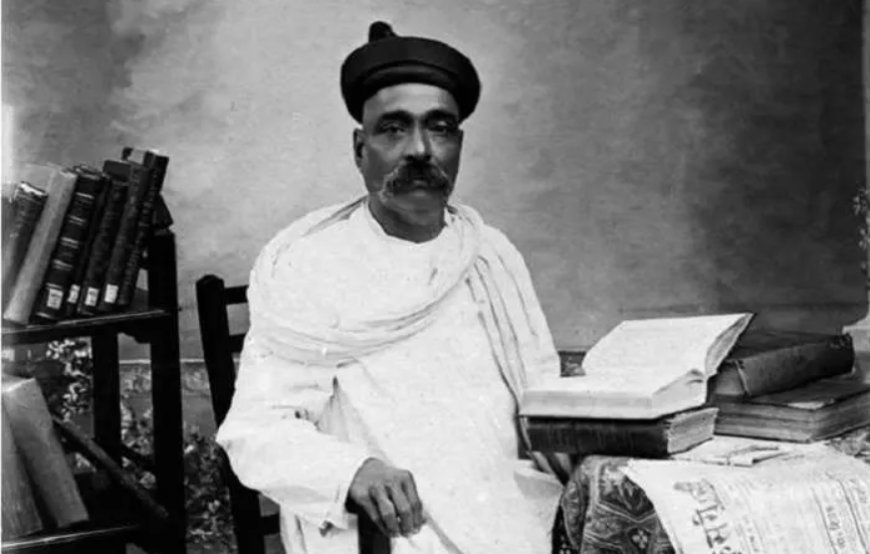
Bal Gangadhar Tilak:
Quick facts:
Name: Bal Gangadhar Tilak
Country: India
Date of Birth: 23rd July 1856
Place of Birth: Ratnagiri District, Maharashtra
Died: 1st August 1950
Occupation: Author, Freedom Fighter, Politician
Political Party: Indian National Congress
Associated with: Indian National Congress, Indian Home Rule League, Deccan Educational Society.
Early Life, Childhood and Education
Bal Gangadhar Tilak was born on 23rd July 1856 in Ratnagiri district of Maharashtra as Keshav Gangadhar Tilak. He was born in a Marathi Chipavan Brahmin family . His father was Gangadhar Tilak and mother was Parvati Bai Gangadhar. His father was a great Sanskrit scholar and a school teacher. Tilak was a brilliant student during his school days. When Tilak was around 10 years old his father was transferred to Pune from Ratnagiri.
Tilak joined Anglo Vernacular School in Pune and later enrolled himself to Deccan college for doing his graduation. He completed his graduation in Mathematics in the year 1877. Later Tilak studied Law from Government Law College Mumbai and obtained Law degree in the year 1879. After his graduation Tilak started to do coaching English and Mathematics in a private school in Pune.
Since his childhood Tilak was intolerant towards injustice and had his own independent opinions on all matters. This character of Tilak made him to come out from the school and dedicated his life to nation and freedom movement. To improve the quality of education to the Indian youth, Tilak with few other friends like Gopal Ganesh Agarkar, Mahadev Ballal Namjoshi and Vishnushastri Chiplunakar founded New English School for secondary education.
Later after the success of school opening they started Deccan Education society in 1884. Later in the year 1885, the society established Fergusson College for post graduation. Tilak also founded two news paper Kesari in Marathi and Mahratta in English.
In just under two years Kesari had more readers than any other local news paper in India. The editors gave the reality of the Indian sufferings under British rule. They motivated the Indians with their writings and asked every Indian to fight against British rule
As soon as Tilak family moved to Pune he lost his mother and he lost his father when he was just 16 year old. Tilak had an early marriage. He was married to Tapibai just before his father’s death. Her name was changed to Satyabhamabai after marriage.
Bal Gangadhar Tilak: The Journalist and Politician
Tilak turned his attention to public affairs and started two weekly newspapers to awaken the political consciousness of the people-
- Kesari (in Marathi)
- The Mahratta (in English)
He wanted to widen the popularity of the nationalist movement which was mostly confined to the upper classes by introducing the Hindu religious symbolism and invoking Maratha sentiments and traditions of the Maratha struggle against Mughals.
To build anti-imperialist sentiments he wrote about celebrating the Ganapathi festival and Shivaji festival on large scale.
He also started akharas, lathi clubs for involving youth more, and anti cow killing societies.
1897: He was prosecuted for sedition for his writings against the provisions of the Epidemic act 1897 for tackling the bubonic plague that had engulfed the Pune region.
- Tilak had targeted Commissioner Rand, and his writings incited two youth, the Chapekar brothers, in murdering Rand.
- The trial and sentence of this case earned him the title of “Lokmanya” (beloved leader of the people).
- He was sentenced to 18 months in prison, where he developed his ideas of swaraj for the first time.
Tilak’s idea of swaraj was gaining popularity and he became a very important extremist leader of congress in the time being.
1905: Viceroy Curzon partitioned Bengal- Tilak strongly opposed this move and supported the Bengali demand for annulment of the act. He advocated for the boycott of British goods, which soon became the Swadeshi movement.
1906: Tilak put forward a program of passive resistance– ‘Tenets of the new party’ in front of the Congress-to prepare people to sacrifice to gain independence. This form of resistance was later adopted by Gandhiji against the British,
1907: The moderate leaders did not agree to such political actions which led to the Surat split between the moderates and extremists.
The era of extremists (1905-1917)
Bal Gangadhar Tilak, Lala Lajpat Rai, and Bipin Chandra Pal– known as the Lal, Bal, Pal– were the extremist leaders whose writings instilled many revolutionary activities in the country.
Leaders like Aurobindo Ghosh were also related to them and a few secret societies like Anushilan Samiti in Bengal came up during the period.
Tilak through his newspapers wrote criticisms against British rule and the moderate nationalists who advocated social reforms along western lines and political reforms along constitutional lines.
He was against social reforms through the interference of the British rather, he believed that social reforms should be done after the Indians get to self-rule. This view of him caused him to oppose the ‘age of consent act’ of 1891.
1908: The Surat split of 1907 helped the British government take advantage of the division and again charged Tilak with sedition and inciting terrorism.
- He had defended the actions of Khudiram Bose and Prafulla Chaki wherein they had tried to assassinate district judge Mr. Kingsford in Bengal using bombs.
- Tilak was deported to Mandalay, Burma, to serve a six-year prison sentence.
- The poor conditions of the jail had a bad impact on his health and he was released in 1914.
Tilak’s politics had mellowed down after this, which was evident in his support of the British government in World War I, he had also given speeches to encourage youth to support British war efforts.
1916: He established the All India Home rule league in Belgaum with the slogan “Swarajya is my birthright and I shall have it”.
It worked in Maharashtra (except Bombay), the central provinces, Karnataka, and Berar.
He also collaborated with the Home Rule organization started by Annie Besant in Madras.
He rejoined the Congress in 1916 in the Lucknow session, and his good relation with Mohammed Ali Jinnah led to the historic Lucknow Pact between the Muslim League and Congress.
1918: Tilak visited England as the president of the Indian home rule league and garnered support and good relations of the labour party which was emerging as a major stakeholder in British politics.
Tilak vs Chirol (1919)
- Valentine Chirol the editor of London times had published a set of articles in 1910 in a book called ‘The Indian unrest’ in which he called Tilak the “Father of Indian unrest”.
- Tilak filed a defamation court against Chirol in the court of London in 1919- he lost the case. His supporters started a Tilak purse fund to help him fund the expenses of the case.
Bal Gangadhar Tilak and All India Home Rule League
Tilak along with Annie Besant and G.G Karpade founded the All India Home Rule League in the year 1916. The main motive of this league was to get independence from British immediately. At the beginning the league had 1400 members it grew in huge size and by 1917 the league had around 32000 members. Tilak started the home rule league in Maharashtra, Central Provinces, Karnataka and Berar region.
Bal Gangadhar Tilak and Social Reforms
Since his childhood Tilak had a dream to serve his country and improve the social conditions of women and children in the society. After completing his education Tilak decided to follow his dreams and he advocated for women up liftment. The government in the year 1890 introduced a resolution to rise the permissible age of marriage for girls from 10 to 12 years.
Tilak and other religious heads of both Muslims and Hindus opposed to the resolution and said that the government is interfering in the religious sentiment of the people. But Tilak proposed to increase the age of girls to 16 and boys to 20.
Tilak also proposed to celebrate Ganesh Chaturthi and Shivaji Jayanti in a grand scale. In 1895 Tilak founded the Shri Shivaji Fund Committee to celebrate the birth anniversary of Chattrapathi Shivaji who was the founder of Maratha Empire. These festivals and events were used by Tilak mainly to unite people and educate people to fight against the colonial rule in India. His popularity grew rapidly and became one of the important faces in the freedom movement.
Bal Gangadhar Tilak Death
Bal Gangadhar Tilak’s health started to decline because of his dissatisfaction with the terrible Jalianwala Bagh massacre incident. Bal Gangadhar Tilak urged the Indians to continue the march despite his poor health. He was anxious to lead the movement, but his health prevented him from doing so. At this stage, Bal Gangadhar Tilak’s diabetes had led to a serious weakening. Midway through July 1920, his sickness grew worse, and on August 1 of that year, he passed very abruptly.
Read about: Sardar Vallabhbhai Patel
Bal Gangadhar Tilak Legacy
Bal Gangadhar Tilak was a social conservative despite having strong Nationalist sentiments. He was a devoted Hindu who wrote extensively about religion and philosophy using Hindu Scriptures. He was one of the most well-known influences of his day, a powerful orator who rallied millions of people to his cause.
Ganesh Chaturthi, which Tilak established, is now regarded as the most important holiday in Maharastra and neighbouring states. Due to his status as an iconic representative of the Indian Freedom fight, Tilak has been profiled in a number of books. The Tilak-founded Marathi newspaper is still published today, however it is now published daily rather than weekly as it was back then.
Amazing and Unknown facts about Bal Gangadhar Tilak
1. He was born into a middle-class-Brahman family. In 1876, he earned a bachelor's degree from Deccan College in Poona in Mathematics and Sanskrit. In 1879, he completed law at the University of Bombay (now Mumbai). Further, he decided to teach mathematics in a private school in Poona from where his political career began.
2. He founded the Deccan Education Society in 1884, to educate people, especially in the English language because at that time he and his associates believed that English is a powerful force for liberal and democratic ideals.
3. He started awakening people through newspapers like ‘Kesari’ ("The Lion") in Marathi and in English ‘The Mahratta’. From these papers, he became famous and criticize Britishers and methods of moderates who advocate social reforms along Western lines and political reforms along constitutional lines.
4. Two important festivals were also organized by Bal Gangadhar Tilak namely Ganesh in 1893 and Shivaji in 1895. Ganesha because the God is headed by the elephant and worshipped by all Hindus and Shivaji because he was the first Hindu ruler who fought against Muslim power in India and established the Maratha Empire in the 17th century.
5. Bal Gangadhar Tilak joined the Indian National Congress (INC) in 1890 and started self-rule. He was the first nationalist freedom fighter who brought the concept of 'Swaraj'.
6. In India, he started the Swadeshi movement. Jamshed Tata and Tilak together established Bombay Swadeshi Stores to promote the national movement.
7. Do you know together Bal Gangadhar Tilak, Bipin Chandra Pal, and Lala Lajpat Rai are known as 'Lal-Bal-Pal'. Tilak was against the Age of Consent Act of 1891.
8. To achieve the political aim, Tilak wanted to generate a mass movement which is different from the opinion of moderates and so, in 1907 there was a split in moderates and extremists in Surat Session. British took the benefit of the situation and send Bal Gangadhar Tilak to the Mandalay jail in Burma (Myanmar) to serve a six-year prison sentence.
9. In April 1916, Bal Gangadhar Tilak launched the Indian Home Rule League with the rousing slogan “Swarajya is my birthright and I will have it.” In September 1916, Annie Besant launched the Home Rule League at Madras (now Chennai, Tamil Nadu). Bal Gangadhar Tilak died on 1 August, 1920.
10. He published The Arctic Home in the Vedas which represents the origin of Aryans and Srimad Bhagvat Gita Rahasya (1915). Also, Om Raut directed the film Lokmanya: Ek Yug Purush which was released on 2 January, 2015.
So, Bal Gangadhar Tilak or Lokmanya Tilak influenced people, spread the message of Swaraj. He was a great orator and inspired several masses. In Maharashtra, Ganesh Chaturthi is celebrated on a huge scale and is considered one of the main festivals which were started by the Tilak only. He spent a lot of time reading Hindu religious books.
Join us, follow us....
Follow on Telegram – Click Here
Follow Whats apps Channel – Click Here
Join Google News Group – Click Here